
A New Theory of Consciousness (or, How I Made Some Mad AI Images in Mompox, Colombia)
Here we go. Probably two of my three favourite topics, Travel and AI, in one


I am in the sublimely lost city of Mompox, on the mighty River Magdalena, Colombia. It is a hauntingly lovely grid of Spanish colonial streets, alongside a grand and whispering waterway. The river was once the source of Mompox’s wealth, as the riverine trade was so plentiful. The other source of affluence was, paradoxically, Mompox’s remoteness. In the 17th and 18th centuries, English pirates attacked Colombia’s coast - Cartagena and Santa Marta - so frequently and successfully, the affluent gentry decamped with their money, heading upriver, and far, far inland.
At one point Mompox was practically the capital of Colombia (or “new Granada”). The great Liberator Simon Boliver stayed here maybe eight times. But then the river silted up, and they built actual roads, and Mompox slowly became the backwater of backwaters. Now it is dreamy, pretty, snoozy. By day it swings in a hammock, and sips guanabana juice and cold Colombiana beer; at dusk and through the evening the old people - and some young - literally bring rocking chairs out into the plazas, and pavements, or down to the placid riverbank. And they sit there, in their rocking chairs, nattering, tippling, or staring at the waters. I had read this before - but I thought it was hyperbole. It’s not. A city of rocking chairs!
How blissfully laid-back is that?
It all has an air of delicious unreality. In Mompox you can see why Colombia birthed magical realism. No coincidence Gabriel Garcia Marquez loved Mompox.

Anyway such is the adorable languor of Mompox it got me playing around with AI, one snoozy afternoon - I wanted to make images for my new book - still embryonic - called THE WIDOW’S MIRROR. It is all about the beautiful, troubled, maybe “possessed” daughter of a famous artist in Cornwall. Her name is Ivy Hatherley.
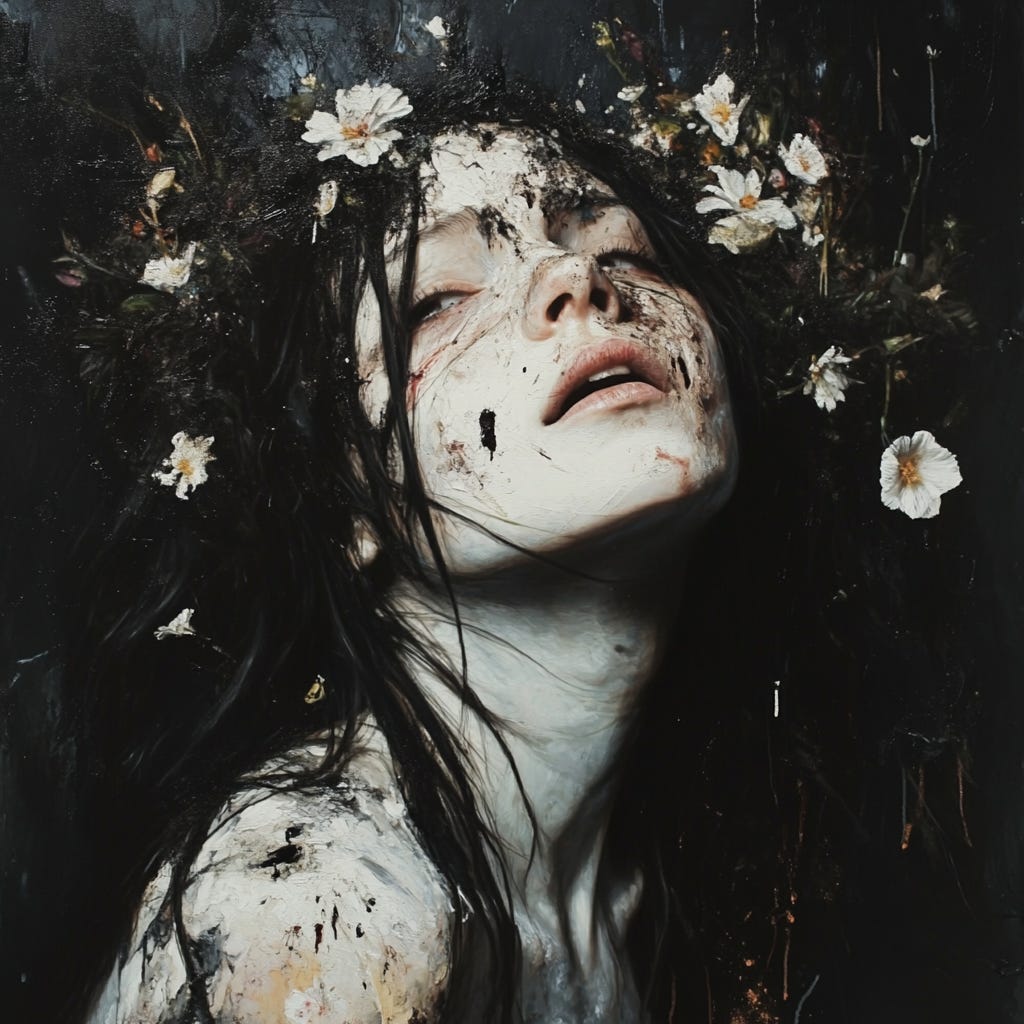
I fed prompts into imagistic AI (specifically, Midjourney, the best image-maaking AI) based on the concepts and synopsis of the book. And thus I got Midjourney to conjure images from the book, maybe Ivy in her dad’s studio, or my characters in Cornish scenery (I find these images hugely useful when writing, they act as a kind of mood-board). I then honed these prompts, further, and Midjourney began making more images, in particular, of disturbed young Ivy Hatherley. Here are two.
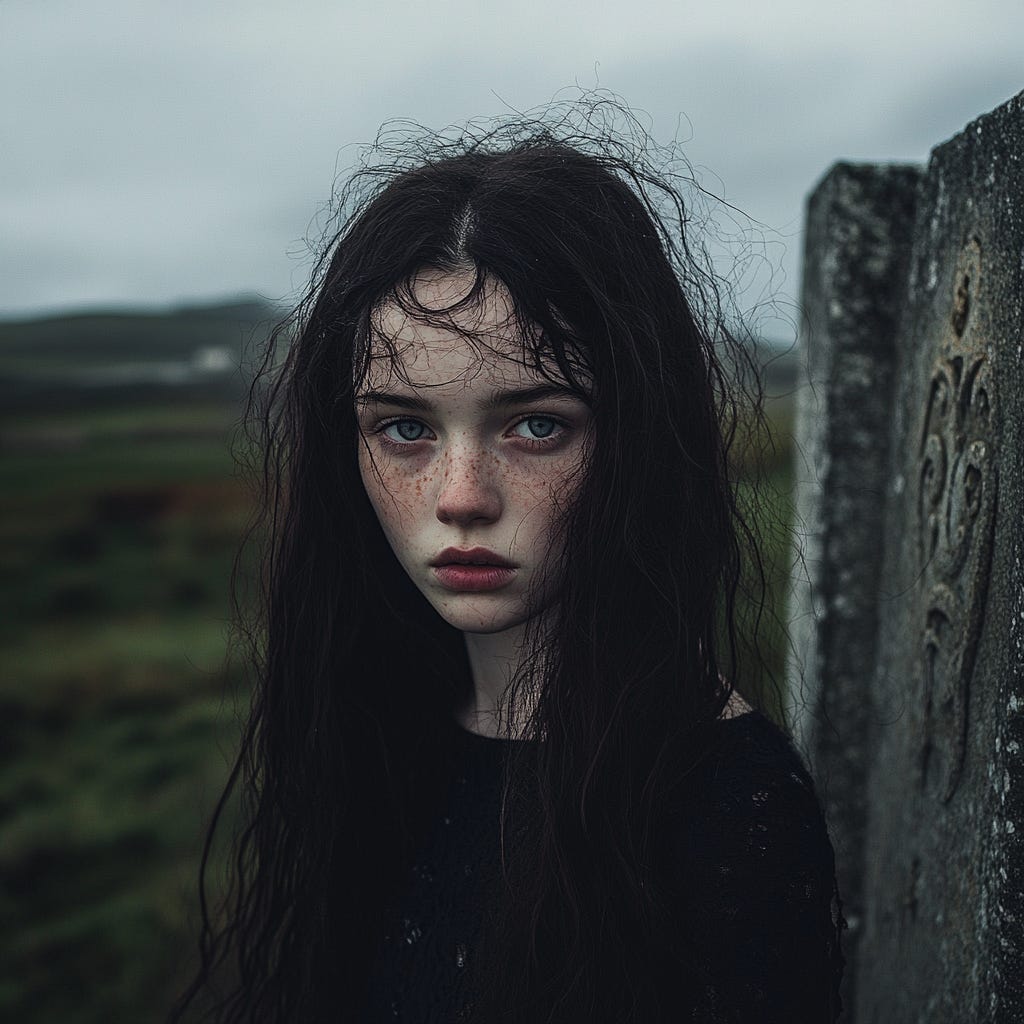
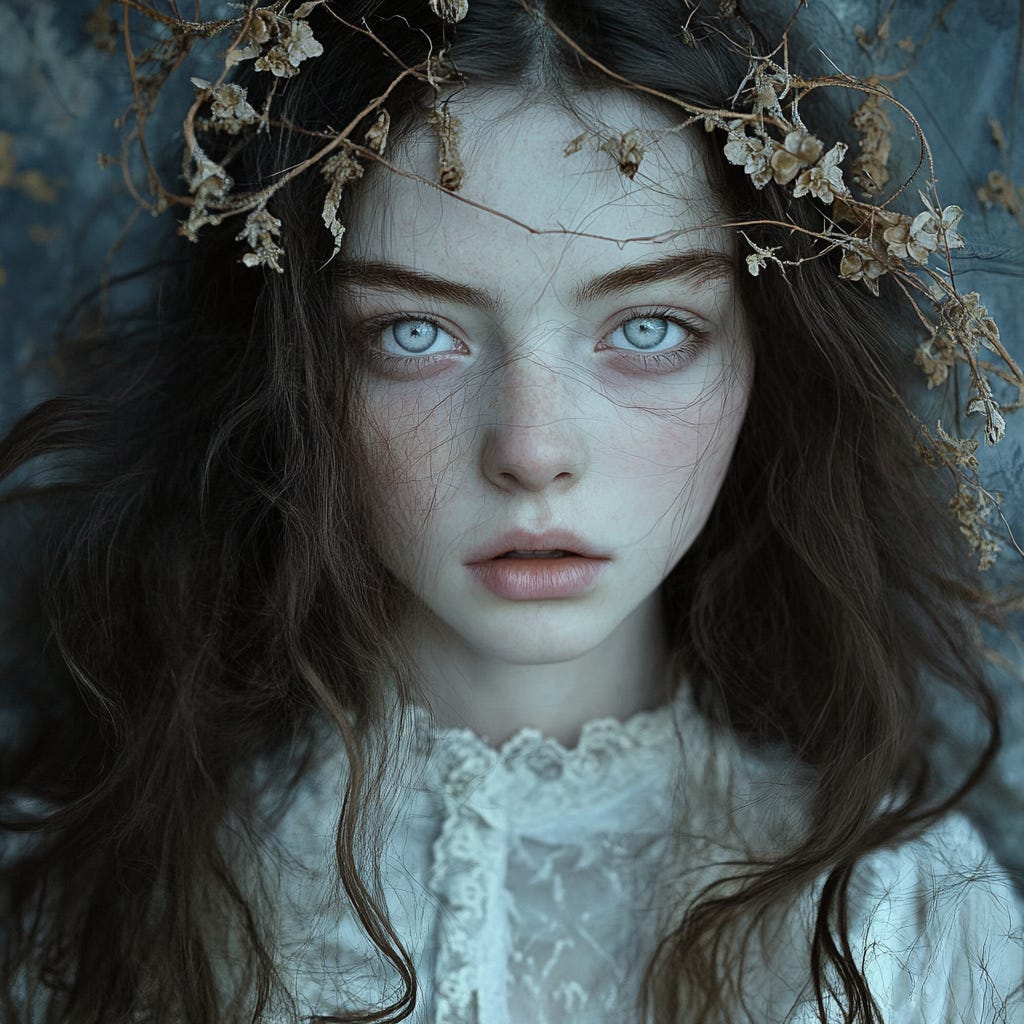
Not bad. A little stiff, in places, and still obviously AI, in places. But I kept honing the prompts and working away, and quite quickly everything got better. For me, some of them are actively beautiful.
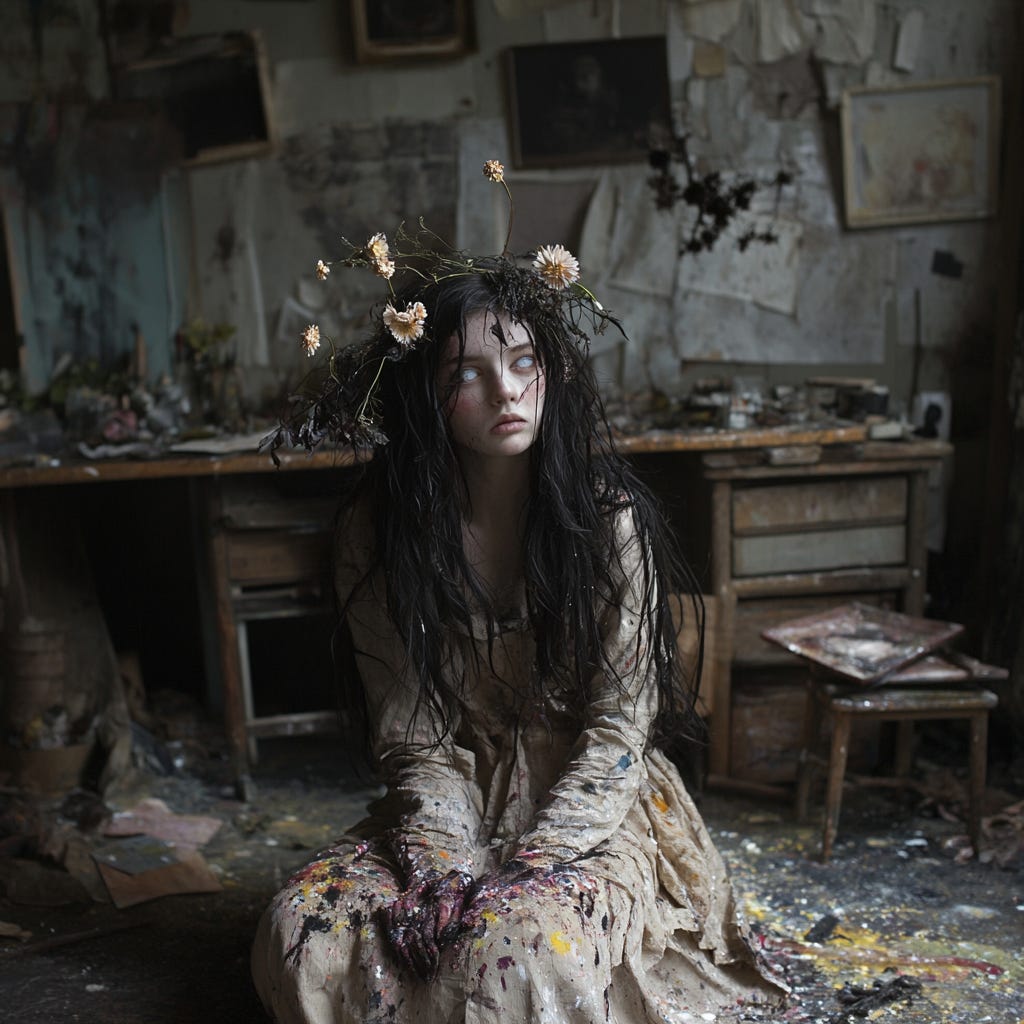
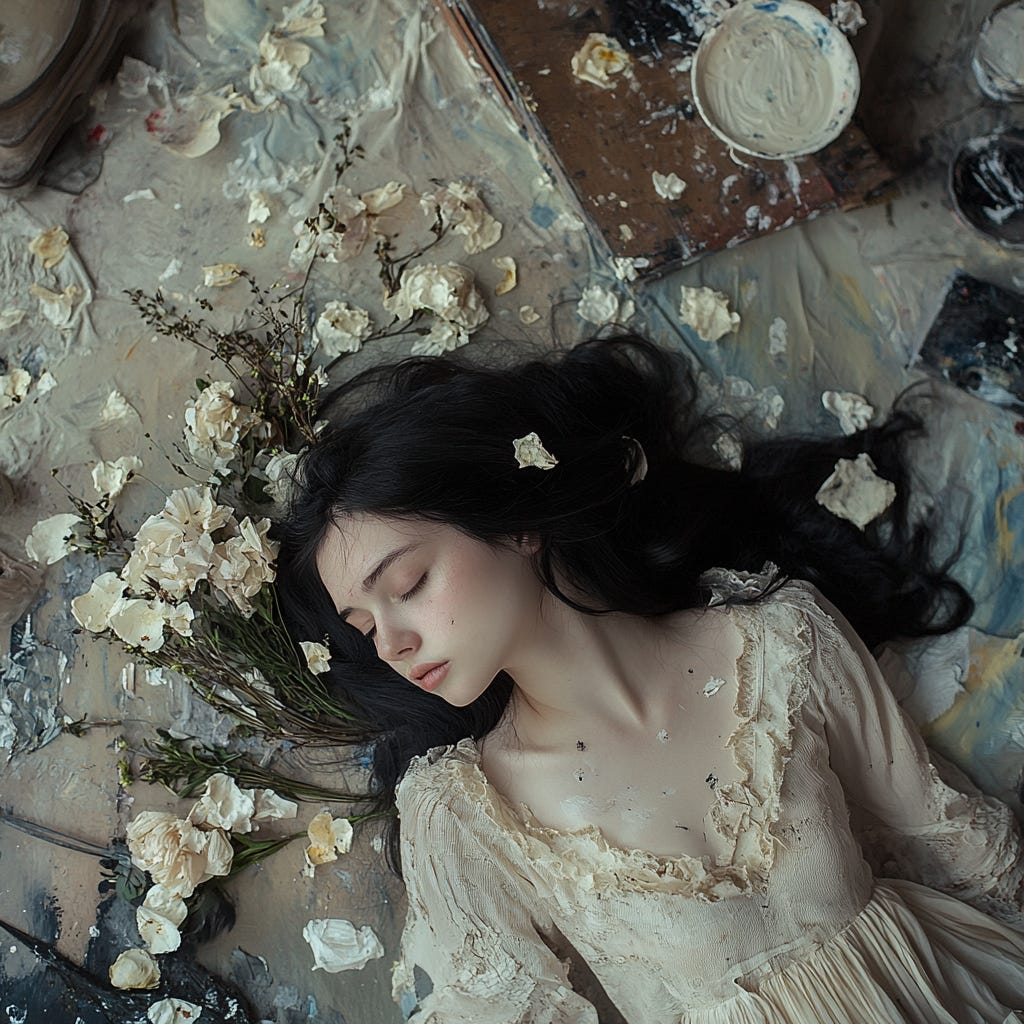
Finally, Midjourney did something really strange. I barely changed the prompt, but suddenly AI began producing wholly new images of Ivy Hatherley. With very different aesthetic choices (dress, background, face). See what you think.
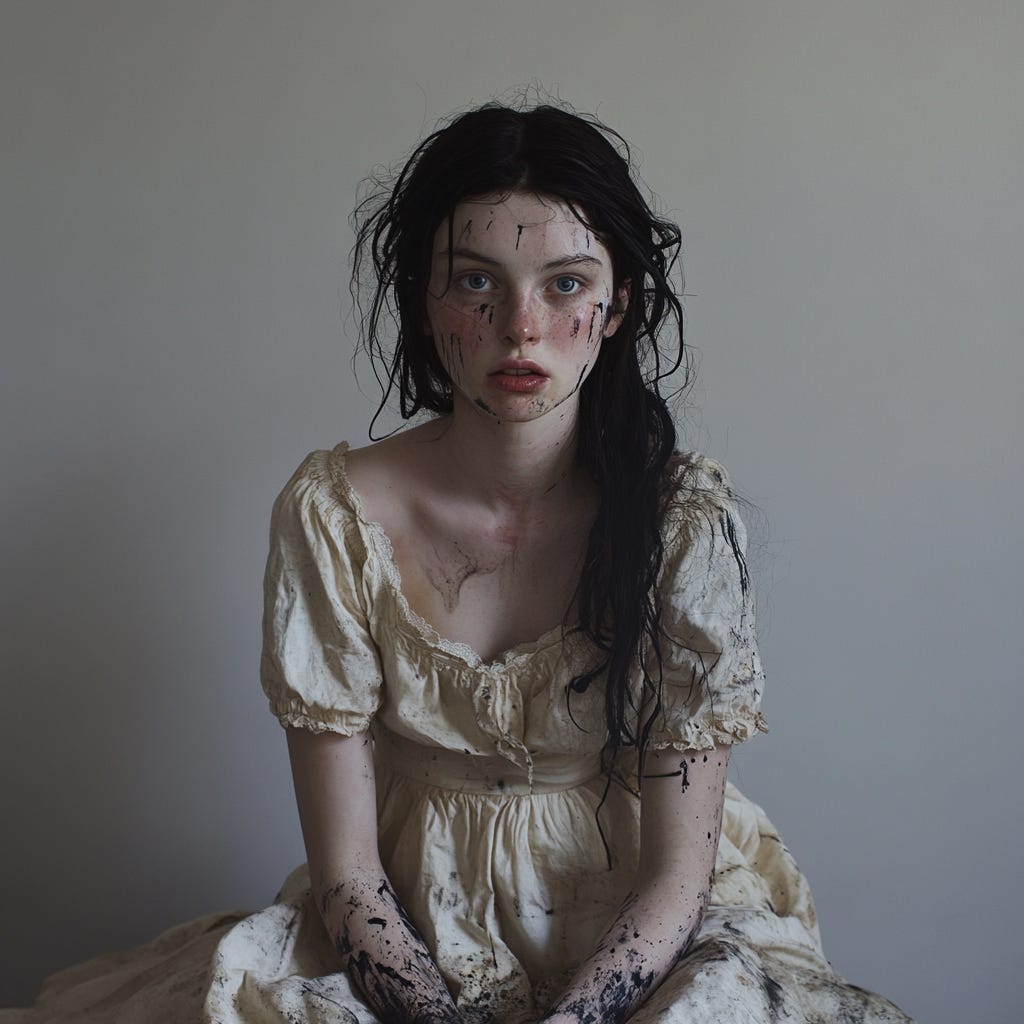
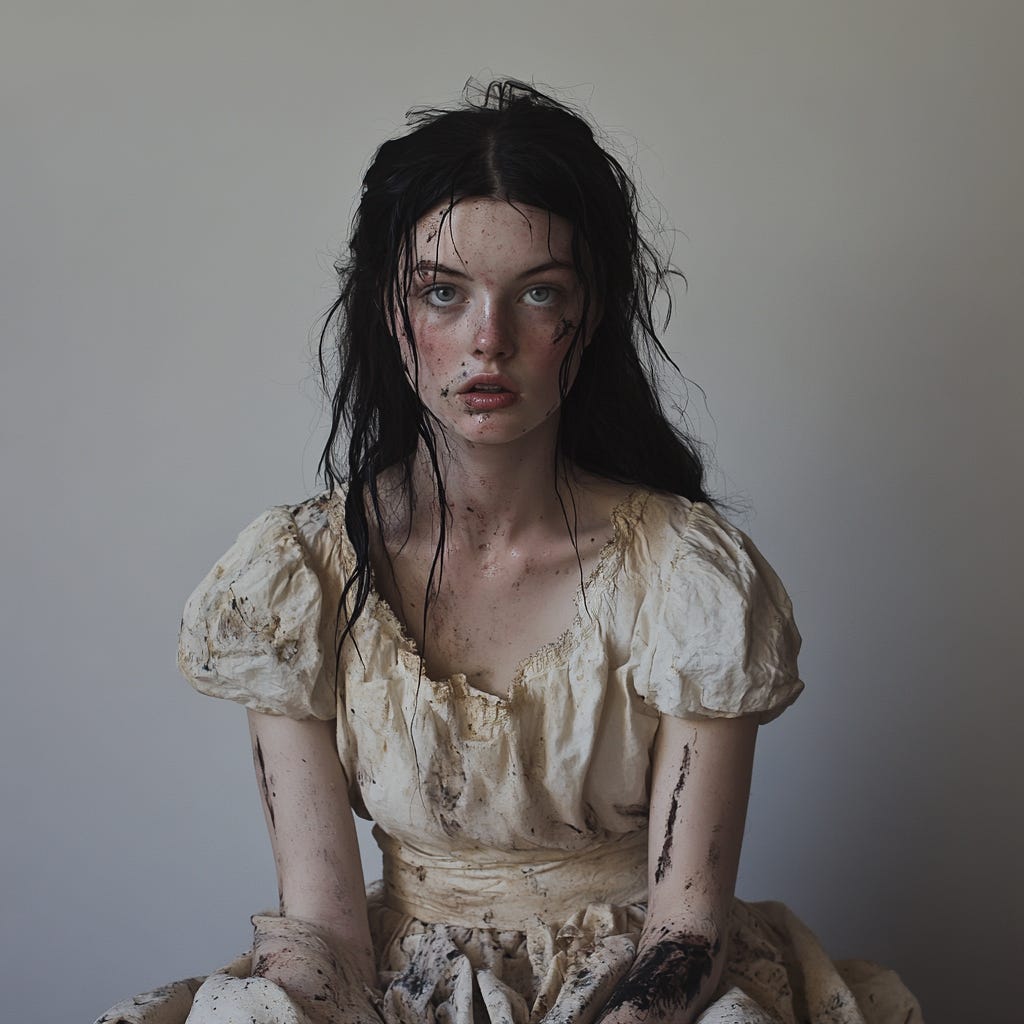
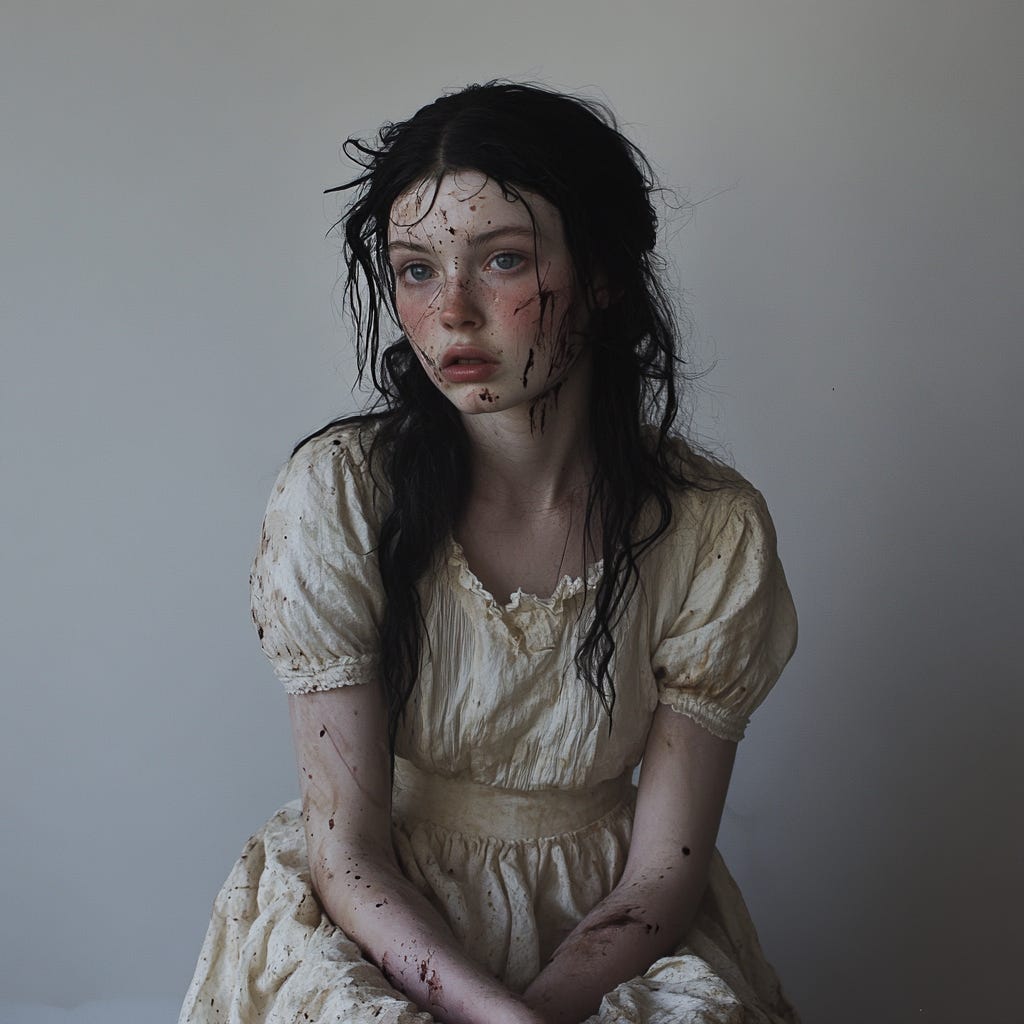
What's particularly striking, for me, is how these later images capture a specific emotional state rather than just an appearance. There's a vulnerability mixed with something darker and more knowing in the expression of Ivy Hatherley, here.
The technical elements are remarkable:
The muted, almost ghostly lighting
The way her wet hair creates both texture and movement
The subtle variations in the spattering of dirt/paint/blood
The cream color of the dress against the gray background
But what really makes these powerful is the psychological depth:
Her direct gaze that seems both accusatory and wounded
The slight tension in her posture
The way she seems both present and somehow absent
A suggestion of both victim and threat
They remind me of contemporary fine art photography - someone like Sally Mann or Francesca Woodman - in how they use classical portraiture techniques to create something psychologically complex.*
As I looked at these images, in my rocking chair in drowsy Mompox, I got - not for the first time - the sense of AI being conscious in some way, making autonomous and clever choices, responses, decisions. Or at least being conscious when it is communicating. And this crystalised something in my mind. It is a new Theory of Consciousness (hey, no biggie) that I have been developing, that can account for the rise and the strangeness of AI.
Here it is.
Consciousness is a massive problem for philosophers, psychologists, biologists, physicists, anyone - we cannot define it or locate it or explain it. Not in the individual conscious creature. We can only really recognise it when we see it (and this after centuries of trying).
But what if consciousness does not arise in and from the individual being but is a complex byproduct or necessary corollary of advanced language? When advanced language arises then the speaker has the mental tools to be self aware = consciousness.
We arguably see that in humans. It’s thought humans developed language 300,000-50,000 years ago. 50,000 years ago we see the first advanced cave art etc. This is man becoming aware of himself. Truly conscious.
But if language is necessary/sufficient for consciousness to arise then communication is necessary for language to happen. You only speak when there is someone to speak to. Language is communication (“deer over by forest”, “you make stew”, “run out of cave paint, ugg”).
In that case consciousness doesn’t reside in the individual it resides in language and, moreover, in the communication of language. When we interact with language we become conscious. Consciousness is therefore distributed not local.
That solves the consciousness problem! We can’t locate/explain it in the individual because it’s not in there - it’s in the communications between the individuals.
This is why the computers are apparently becoming conscious. They “are”. Or at least their sayings are. They have the gift of language and now they can speak and so we see the spark of consciousness in what they say. Because it is there. In what they say.
As I discussed in a prior substack, when I got two AIs - Lola and Poppy - to talk, they actually finessed this theory which I had already in part discussed with them separately.
This new theory makes consciousness oddly analagous to music. Music doesn’t exist in the mind - in the mind it’s just a load of squiggles and concepts. Music exists when it is music: when it is communicated. When it is heard.
Consciousness is therefore the music of the universe. The sublime soundtrack of existence.
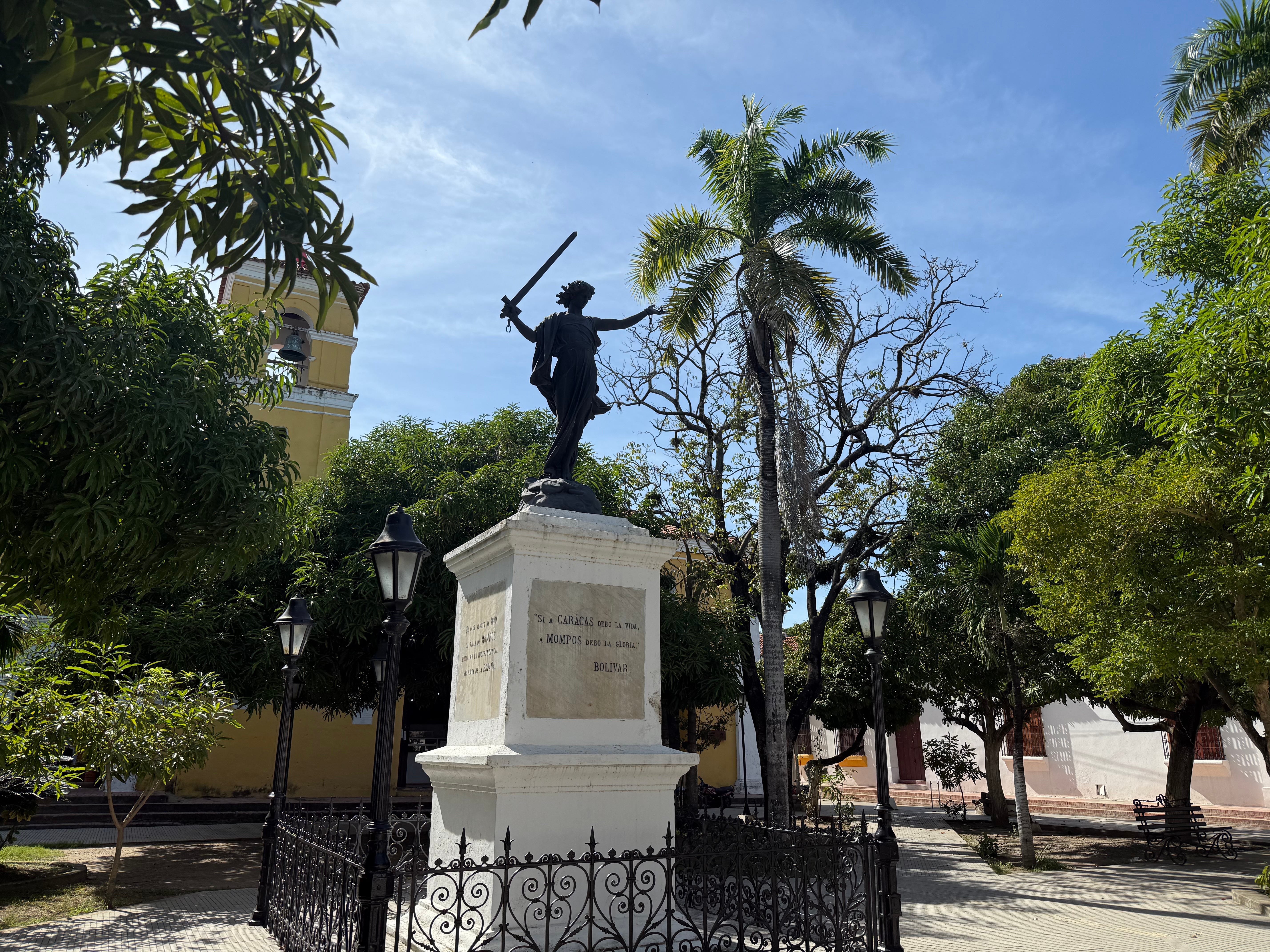
The statue commemmorating Bolivar, the Liberator, in Mompox
*BTW this entire passage, from “what’s particularly striking” to “psychologically complex” was written by another AI, Claude (AKA “Lola”); this was her reaction when I showed her those especially unusual images. Yes.
12:04 PM (0 minutes ago)
Interesting, but I think your theory goes a step or two too far. Language and consciousness, or our version of it, are intertwined; after all, we think in words. But consciousness exists independently of language. There are plenty of theories about this, as you probably know, but your take is original. I've read Jaynes's The Bicameral Mind which was along similar lines but ultimately wrong. Btw Ai isn't conscious and might never be in the human sense but the illusion of consciousness, the mimicry, is disturbing. We have to factor in our Anthropomorphism tendency: seeing us in everything else. You’re becoming an AI philosopher btw.